NLG Tool Tethering
A tool dropped from height can injure someone far below and well outside the barrier. NLG tool tethering keeps every tool attached, with tested, serial-numbered parts rated for its weight. Supplied in Ireland by Advanced Safety.

A tool dropped from height can injure someone far below and well outside the barrier. NLG tool tethering keeps every tool attached, with tested, serial-numbered parts rated for its weight. Supplied in Ireland by Advanced Safety.

A spanner slips out of a glove 20 metres up. It doesn't land neatly inside the exclusion zone. It can hit a beam, a scaffold tube or a handrail on the way down and glance off well beyond the barrier.
Irish law already expects this to be managed. Employers must take suitable steps to prevent anything falling that could injure someone, and the HSA's guidance names tools and mobile phones, and attaching them to people or fixed structures, as one way to do it.
Tool tethering does exactly that. Every tool at height gets a tether point, a lanyard and an anchor, each rated for its weight.
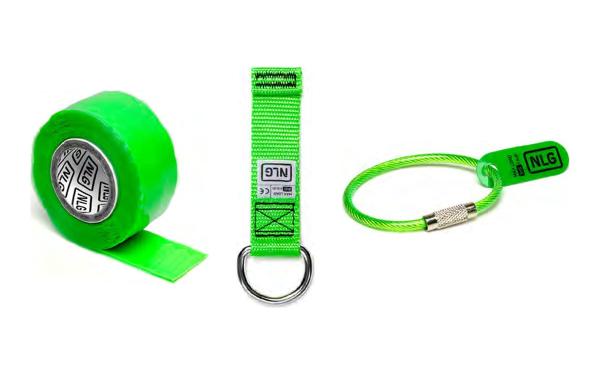
Tether Tape™ with a D Ring, Tether Loops, Rings and Chokes give any tool a load-rated attachment point, without damaging it.
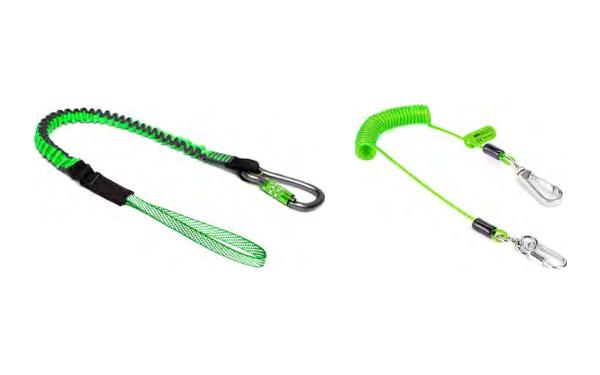
Bungee, coil, webbing and retractable lanyards rated from 0.5 kg to 38 kg. Use the shortest one that still lets you work.
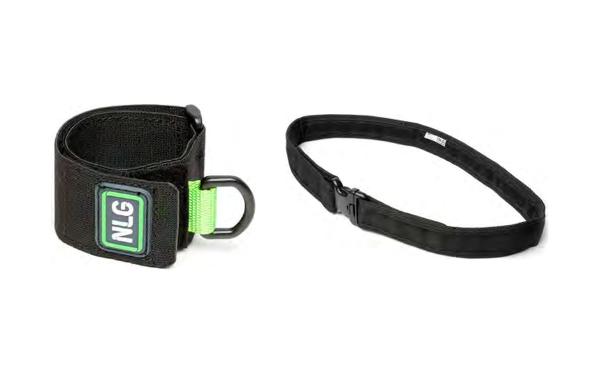
Wristbands for tools up to 1 kg, belt and harness anchors up to 3 kg, and the 40 kg Heavy Duty Anchor Choke™ for a fixed point.
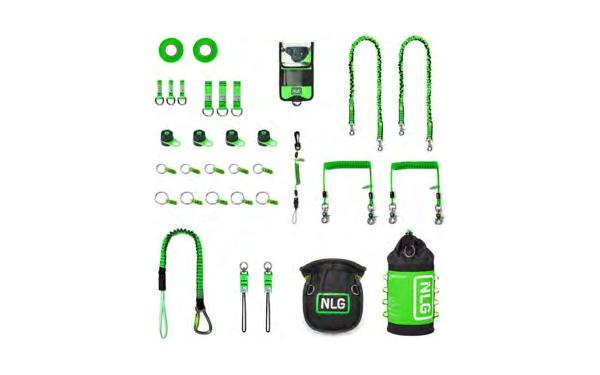
Ready-made kits for hammers, spanners, screwdrivers, nips, tape measures, heavy power tools, radios, phones and MEWP baskets.
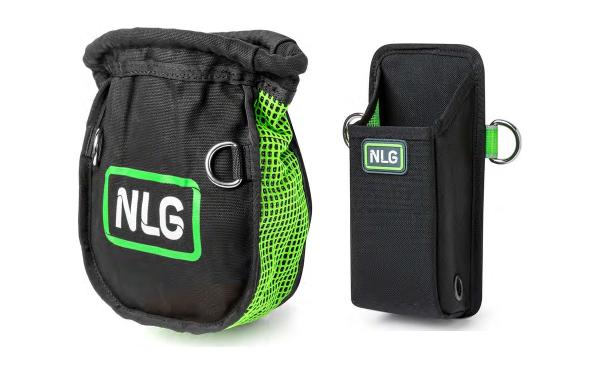
Pouches, holsters, buckets and MEWP bags with anchor points built in, so tools are covered on the way up and between jobs.
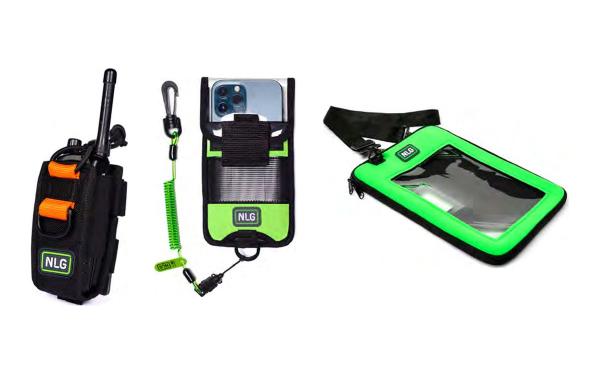
Cases and pouches that keep the screen and buttons usable while the device stays tethered.

Not sure what fits? Build a correctly rated tether for any tool in four steps.


Drills and grinders are the heaviest things most people take up. The Drill Harness™ and Tether Choke™ give them a proper attachment point, and a fixed anchor takes the load, so a drop never pulls on the worker.
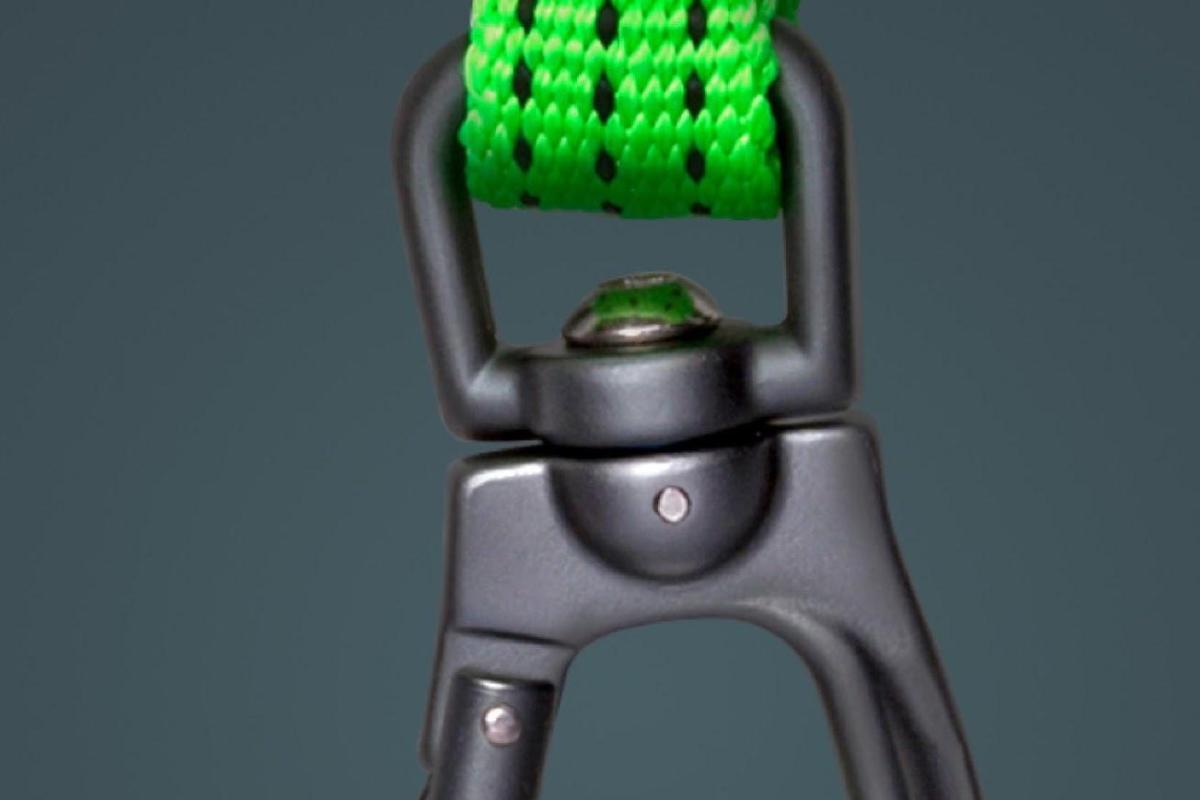
Every NLG tether point, lanyard and anchor carries its load rating and a unique serial number, is CE marked, and is dynamic load tested by a third party to twice that rating. The declaration of conformity is available for every product.

We help you work out what each crew needs, from a single kit to a full tool list, and supply it on one account. Build your list in the Tether Builder, then send it to us for a quote.
Not if the lanyard suits the job. Coil and retractable lanyards stay out of the way, bungee lanyards stretch as you reach, and Quick Clips™ work with gloves on. Use the shortest lanyard that still lets you work: less length means less load in a drop.
NLG rates a wristband set-up for tools up to 1 kg and a belt set-up up to 3 kg. Anything heavier goes to a strong fixed point, such as a load-rated rail or beam, so a drop never pulls on the worker. The Tether Builder applies these limits for you.
No. Tether Tape™ is self-fusing silicone with no adhesive, so it leaves no sticky residue if it's removed, and loops, rings and chokes fit around the tool rather than into it. If you want a permanent point, NLG also offers a drilling service.
Never. Tool lanyards are rated for tools only. Keep them clearly separate from personal fall protection equipment, and don't clip a tool lanyard to a fall arrest anchorage meant for a person unless it's rated for that use.
Inspect every part before each use, and take anything worn or damaged out of service. Contrast stitching, wear indicators and serial numbers on NLG products make the check quicker and let you track each item.
Metal-free parts are available, including a non-conductive D Ring and a non-conductive short coil lanyard, for tools up to 1 kg. They reduce risk but don't make a tool insulated, so follow your electrical safe-work rules and talk to us before choosing.
Most dropped tools aren't carelessness. They just weren't attached. Once every tool has a tether, a slip stays a slip instead of becoming an incident.
Under Regulation 116 of the Safety, Health and Welfare at Work (General Application) Regulations 2007, employers must take suitable and sufficient steps to prevent, so far as is reasonably practicable, the fall of any material or object where necessary to prevent injury. Where that isn't practicable, they must stop anyone being struck by it.
The HSA's guidance on work at height gives tools and mobile phones as examples, and attaching them to people or fixed structures as a control. Tethering sits alongside toe boards, netting and exclusion zones in your plan, not instead of them.

Invest wisely in smarter safety systems. Talk to our team today and find out more.
